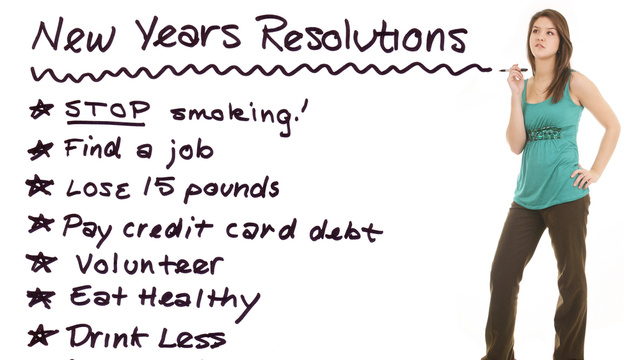


As we wrap up another year, people keep asking if I have any New Year’s resolutions. I never make official New Year’s resolutions. I realized in my twenties that when it comes to forcing overnight changes I usually fail. I don’t enjoy adding additional pressure to my life. For me, change comes gradually. I do better with being in the process and witnessing improvement than adhering to hard and fast rules. I think for addicts in recovery, learning what you respond to best is key in setting the stage to make change.
While there are some people who respond well to the challenge of making drastic change, cut-off dates, and strict adherence to rules, for most of us resolutions are often just a new baseball bat disguised in sparkly paper waiting to be unwrapped – something new to beat ourselves up with.
Here are some of the ways I successfully took on self-improvement goals that many people set as New Year’s resolutions:
The Gym:
I always joke that before I got my first gym membership in recovery, every day was fairly pleasant. Once I joined a gym, every day that I didn’t go I’d hate myself. Suddenly I was spending $100 a month to have a new way to hate myself. I’d feel like shit because when I joined I really thought I would go every day. I’d compare myself to the one or two friends who went 5 times a week. If they can, why can’t I? As time went on, I found my own rhythm to working out. It comes in waves. I’ve had periods where I’m energized and excited by various gym classes and will go religiously and there are other times where I’m lucky if I can make it there 3 times a week before closing for a forty-five minute workout. After several years of developing my own relationship to exercise, I realized that I workout because it has a positive effect on my mood and how I handle myself in the world. When the driving factor became mood over physical appearance, it was much easier to go. I guess I care more about feeling good than looking good. At least this is what my actions seem to imply. Funny thing is that whatever gets you there, over time, your body’s going to get better, stronger, healthier.
Smoking:
I would set a date to quit smoking and last only a few days. It was torture because I’d made so many public announcements that I was quitting. I knew I wanted to quit for health reasons but in my heart I wasn’t ready. I felt like a failure and every time I let myself down it felt the same as every time I’d gotten high after swearing I wouldn’t. It appeared so easy for other people. Then one day when I’d given zero thought to it, zero prep time, I woke up and decided I was a non-smoker. This happened naturally but the circumstances surrounding the days leading up to it had changed. Suddenly I hated the way my car smelled, I was brushing my teeth and washing my hands after every cigarette, and I could smell it everywhere I went. The smell was new and nauseating and I’m sure was what it took for me to want to leave smoking behind.
Diet:
I could easily eat pizza every day and never tire of it. In fact, when I’m busy and running with no time to prepare food, I’ve had days pass where I am grabbing a slice too often. Because I normally eat a variety of healthy clean foods, my body does not respond to a heavy pizza diet. I feel horrible in subtle ways- lower energy and a mild depression. I need fresh fruits and vegetables daily to feel good. The same goes for sugar – if I eat fresh fruit daily, I have no sugar cravings but if days go by without fruit, I am suddenly craving cookies and sweets. Now there is no one size fits all when it comes to food – especially because a lot of people in recovery also have easting disorder issues, but for me, as long as my diet is balanced and healthy, I will indulge in whatever I desire and not over do it. If I start to overdo any semi-junk foods, my mood is affected negatively so I will put on the brakes. At this point in my recovery, I am motivated purely by a desire to feel good.
I have listed these things because in my first couple years clean, these were the areas I wanted to address. I wanted to be a person who LIVED a healthy life. I would look to others to see how they were doing it but I would always hold them as models of perfection. It never occurred to me back then to ask them how they got there. From the outside they just looked like people who woke up one day and became gym goers, non-smokers, and healthy eaters. I should have asked them what the process was that got them to where they were. Addicts tend to compare themselves with others and give up if they fall short. But often, the role models we look to for inspiration are also a work in progress – just like we are. Rome wasn’t built in a day and if we resolve to create positive change in our coming year, we will have the most success if we set perfectionism aside and strive for progress at a pace that we can handle. Create a resolution to move toward a goal and remember we each get to create our own path to it. Stop comparing your progress to others’. You may struggle where some excel effortlessly and vice versa. Be as kind, loving and encouraging to yourself as you would be to others and you will see results in all areas you strive to improve. One day at a time.